This October, I had the opportunity to visit Kouchibouguac National Park on the east coast of New Brunswick. This was my first time exploring the landscape of that area, and I was amazed at the diversity of ecosystems present along that part of the coast. For my visit to the park, I picked out three walking trails that I thought would be enjoyable for the autumn time of year. I chose the Bog trail, the salt marsh trail, and Kellys Beach.
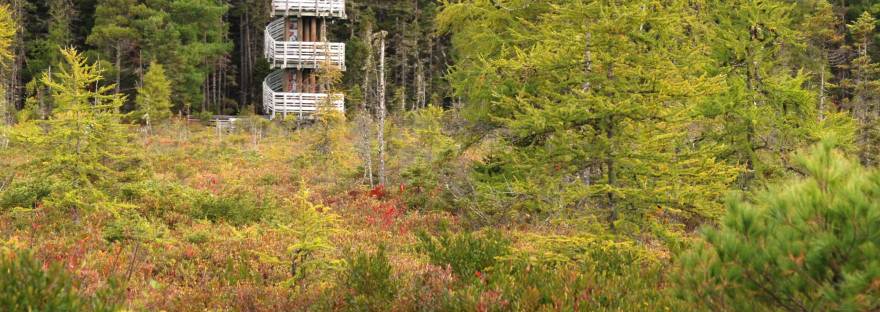
I started with the Bog trail, which was a short 1.8-kilometre (1.12 miles) walk that started with forest but was mostly a boardwalk out onto a freshwater bog. Bog habitats have always been a favourite of mine, and this one did not disappoint.
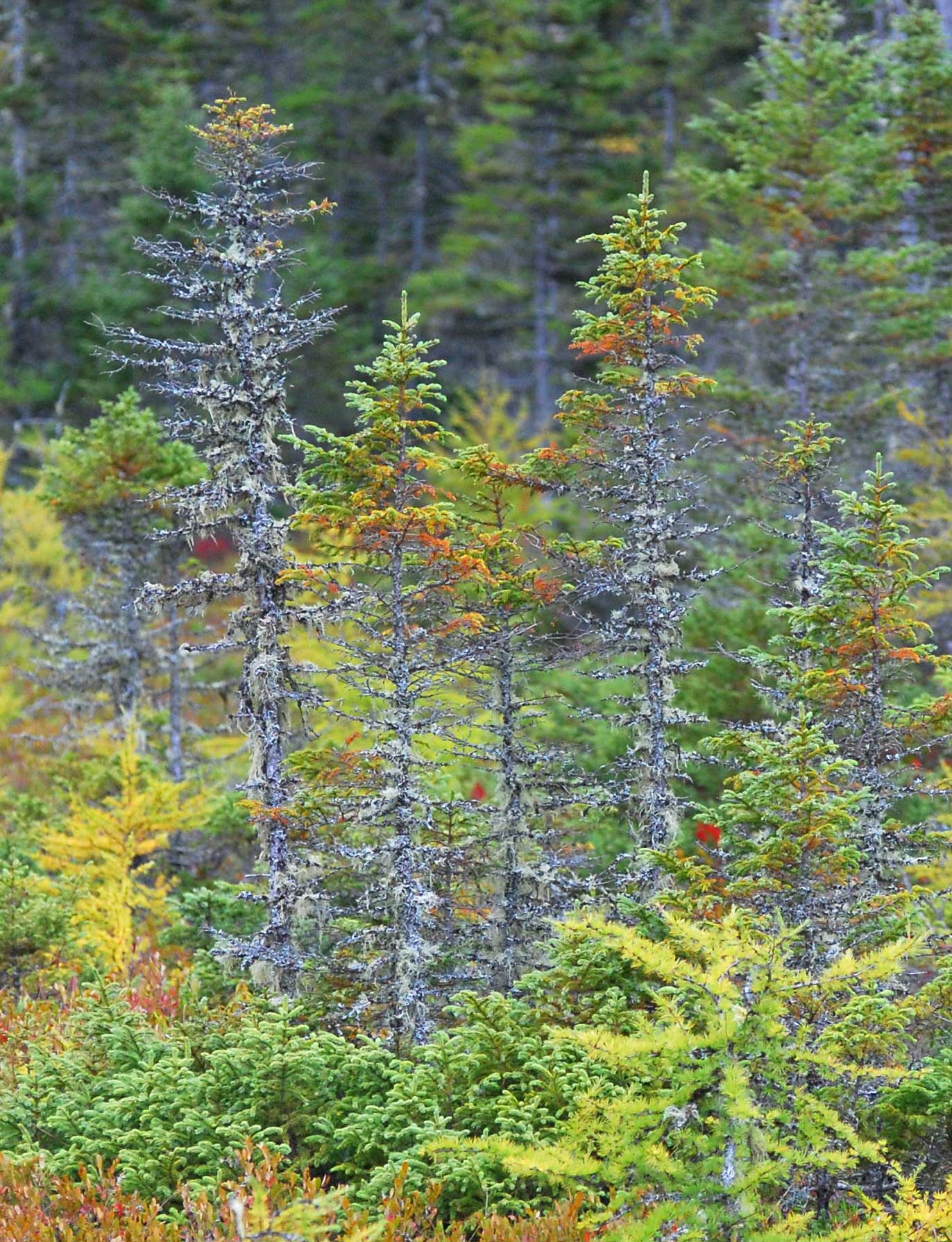
While the rare orchids that live in this bog were not flowering this time of year, there were many of the carnivorous plants throughout the landscape, and the contrast of the light colour of the lichens with the rich burgundy of the shrub leaves was absolutely beautiful. But what captured my attention the most were the conifer trees. They looked mature, even ancient, but were no more than six feet tall. Walking by them on the boardwalk made me feel like a giant looking down on an old forest.
Bogs seem deceptively devoid of a thriving ecosystem, but when you really look, they have a thriving variety of life that finds a home there.
The short boardwalk trail through that salt marsh offered a nice contrast to the bog experience, although I found the salt marsh a bit underwhelming. Unlike the bog, the salt marsh is affected by the tides of the ocean, and as a result, the habitat is quite different.
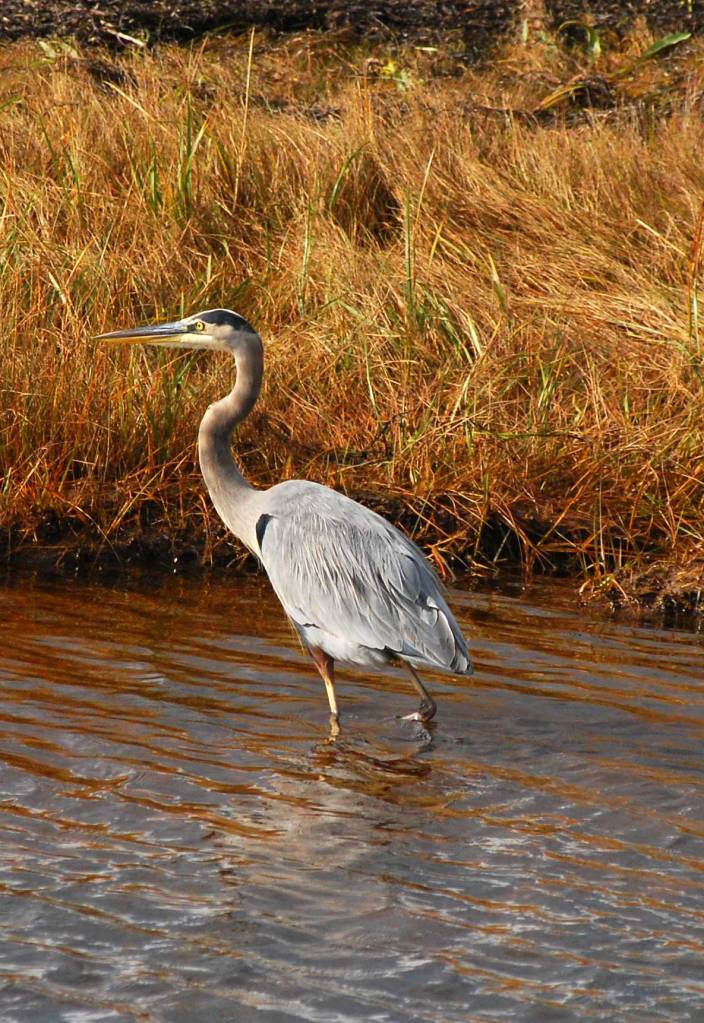
More tall grasses and less moss and lichens What both the bog and the salt marsh have in common are plentiful amounts of mosquitoes, although the salt marsh had more mosquitoes in my experience, and thankfully, in mid-October, they were overall not too bad. One thing that the salt marsh ecosystem had that the bog didn’t was a wide variety of birds. The close proximity to the sea made it a nice, sheltered resting spot for a variety of water birds, such as the Great Blue Heron.
The last walking trail that I took was the boardwalk to what is the main attraction of the park, Kellys Beach. The fragile dunes were definitely beautiful, but the lagoon and edge of the salt marsh that the boardwalk weaves through were the highlight of the experience for me.
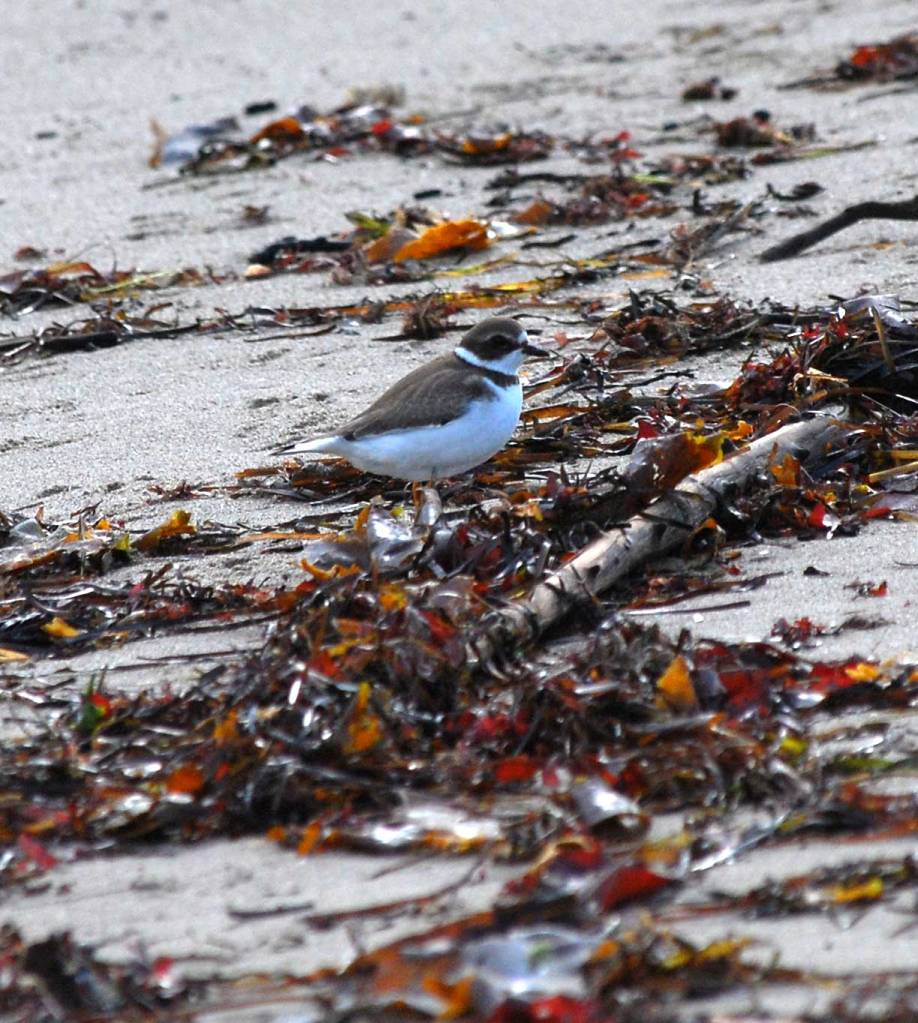
This part of the park is a birder’s paradise. There were flocks of plovers, Canadian geese, and quite a few herons. On the beachside, I even saw a rare Piping Plover. It’d be interesting to see how the types of birds change with the seasons. I was there during the fall migration. The sandy beach was also a nice treat since I grew up around very rocky and pebble-filled beaches.
My trip to Kouchibouguac National Park was a really great experience that I hope to repeat again, but you don’t have to travel to a far-off park to have a new nature experience. Often, it comes down to being more observant and present in your favourite places. You can set yourself the challenge of seeing how the ecosystem changes as you walk along a path you commonly use, decide to check out a new park close to home and explore that, or even see how the different areas of your yard lend themselves to supporting different types of bugs and vegetation.

 The Heron and Rose
1 thought on “Coastal Diversity at Kouchibouguac National Park”