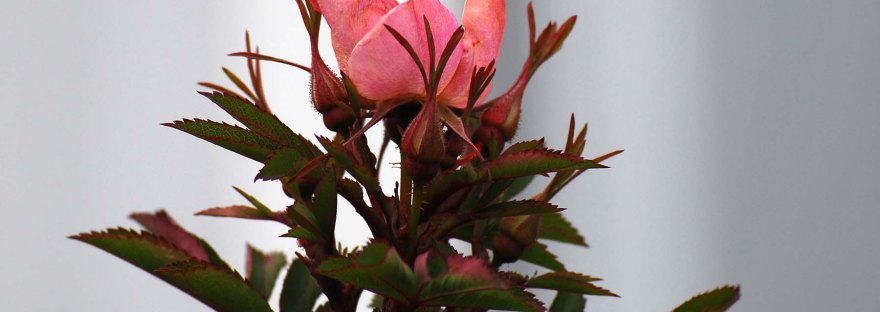
Roses are some of my favourite flowers to grow in the garden. The more domesticated varieties can be captivating, but the simplicity of the ‘wild’ rose varieties makes them some of the prettiest flowers in the garden, in my opinion. They are fast in their growth, have a nice fragrance, and the bees and other pollinators are very attracted to the flowers.
Wild roses are a hardy category of rose that grows wild in many parts of Canada. In my province of Ontario, there are three main species that are found in wild spaces: Rosa acicularis, Rosa rugosa, and Rosa woodsii. They are fast growing shrubs that have a tendency to form thickets that range from 1 to 3 meters tall.
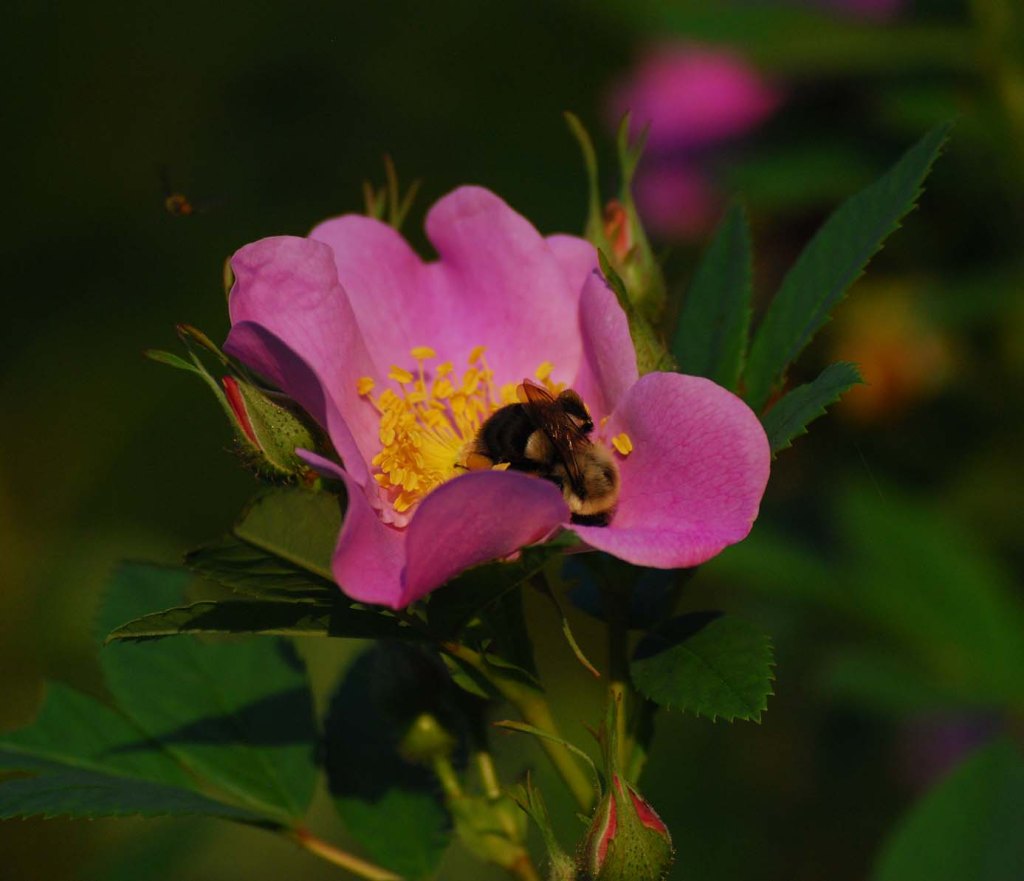
One characteristic of wild roses is their maximum of 5 petal flowers that are usually pink but there are sometimes white flowers. When planted in a home garden they do require attention so that they do not overtake the garden. They spread by sending out suckers that can spread underground and rise some distance from the main rose stalk.
In my ongoing attempt to increase the number of native plants in my garden, I was given a wild rose for my birthday three years ago, and it has become my favourite flowering plant in my garden so far. I even prefer it to my regular cultivated rose, which was previously my favourite of the garden. I wasn’t quite prepared for how aggressively it grows and spreads, so I have to keep vigilant watch for root suckers so that it does not push out the other plants in that area of the garden.
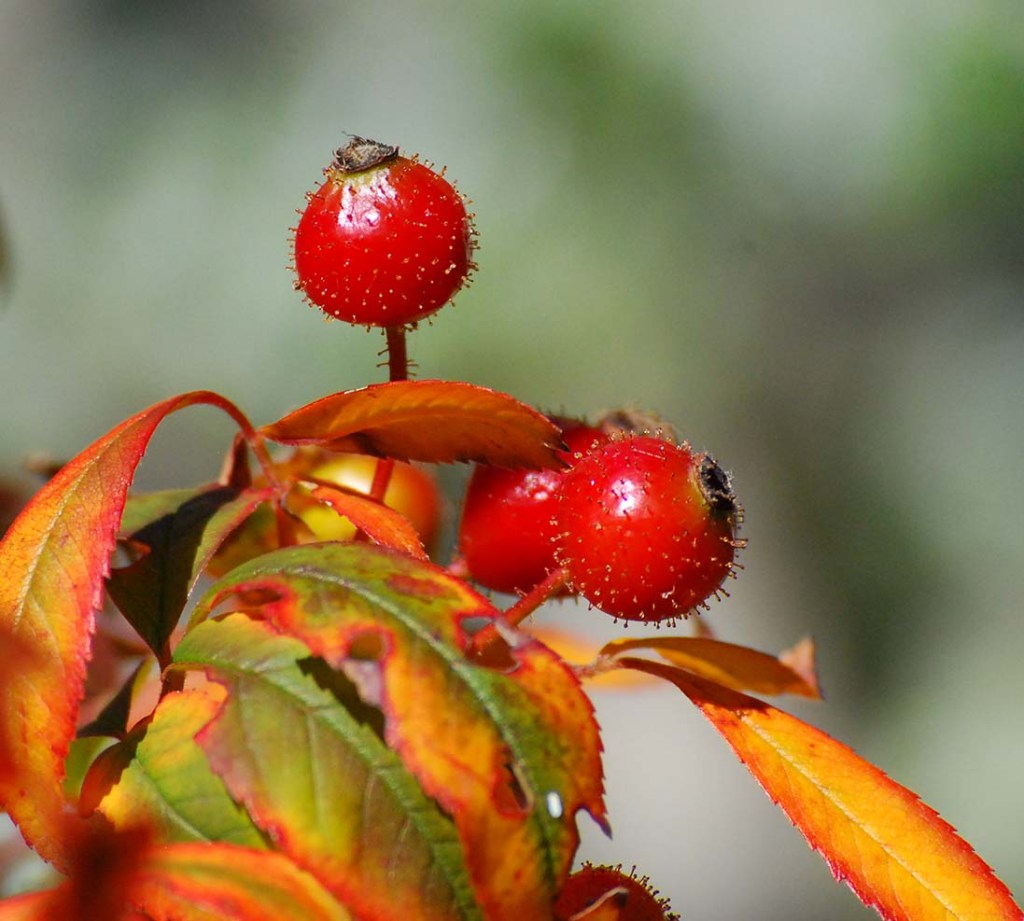
Other than that its enthusiastic growth, it is one of the easiest roses to maintain, and the flowers are covered in honey bees throughout the summer, and it has a wonderful scent. The other benefit of wild roses is the rose hips! The buds, flowers, and rose hips are all edible; just remove the seeds from the rose hips first. I collect the flowers, and I also dry the rose hips for tea mixtures. Wild roses are a great addition to the garden because they are easy to maintain and provide our bees with much needed pollen.
Further Reading
Wild Roses: Types and Identification https://mindplants.com/wild-rose-types/
History of Roses: University of Illinois https://web.extension.illinois.edu/roses/history.cfm
Wild Roses: The Native Roses and Naturalized Roses of North America https://davesgarden.com/guides/articles/view/710/

 The Heron and Rose